
Show Description:
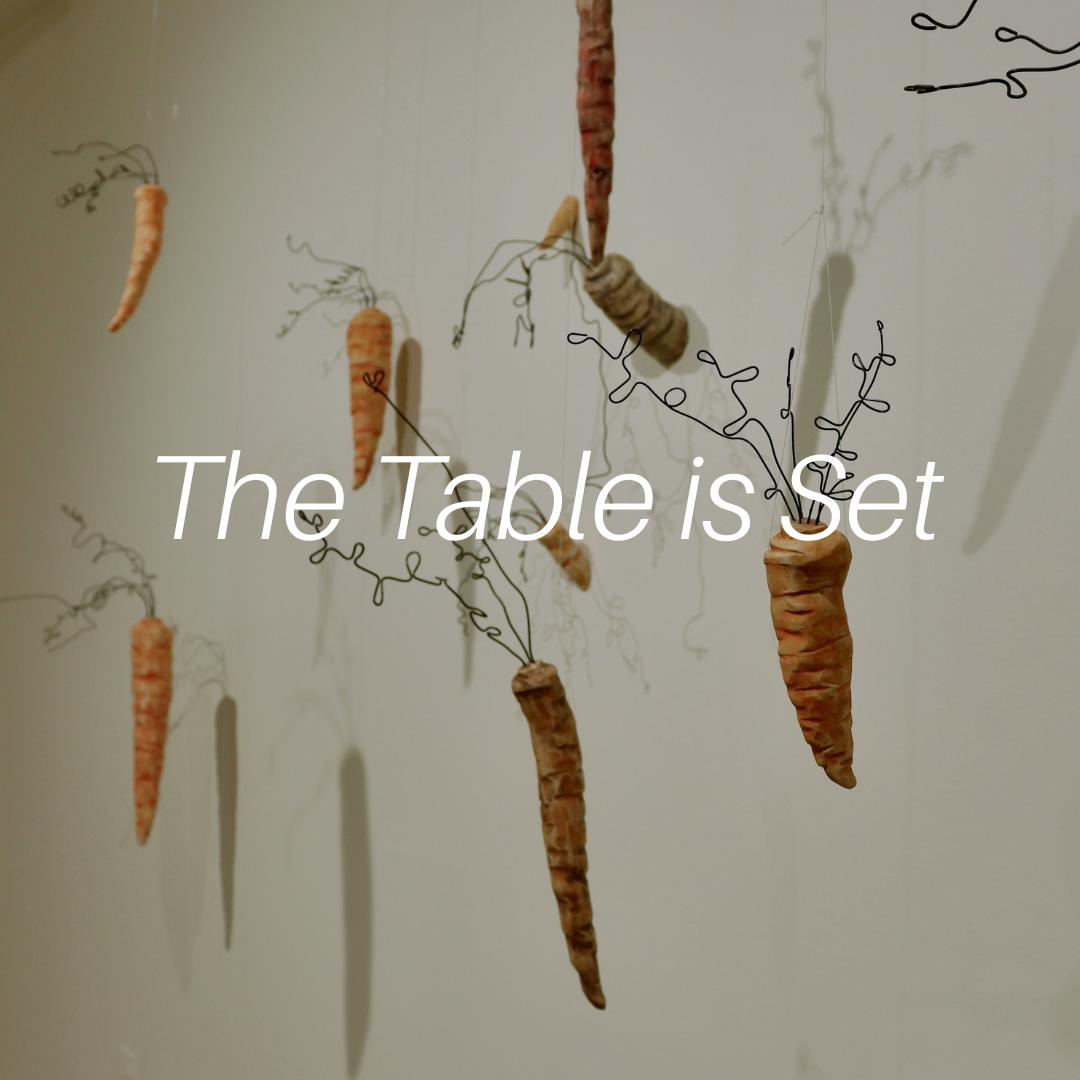
‘The Table Is Set’ is a cohesive body of work which honors the everyday people, objects, and rituals in life. The central aspect of this concept is the dinner table. This is a space where individuals gather and interact as a whole; despite differences in background, culture, language or family ties. There is beauty in the simple act of gathering, sharing a warm drink, eating food, and sitting together. The faces, symbols, household objects, and food items depicted throughout the show display the beauty and holiness of the ordinary. By including iconographic halos in combination with commonplace faces and objects, Liv is assigning significance and beauty to everyday people and actions.
Artist Statements:
Welcome to the table. For most of us, this is a comfortable space in which we find ourselves at the beginning and end of every day. It is a space of gathering, sharing, drinking and eating. In this body of work, I am exploring the significance of the people, objects, and rituals which are shared in this space.
I started to meditate on this concept while studying abroad in Costa Rica, spring, 2023. Living with a family that I was not biologically related to made me consider the aspects of home which transcend geography, language, cultural variation and familial connection. In spite of the differences, I have discovered that the sacred act of sharing a warm drink, eating a meal, or laughing together neutralizes and counteracts feelings of disconnect and isolation.
Although the depiction of a simple table setting is not unique to this particular country, I have come to deeply associate it with my time there. The combination of iconographic imagery and simplistic symbols are united with the physical objects included in a table setting. While sipping a steaming cup of coffee and relating the events which have taken place within a day, the individual communing at the table will see their reflection in the stack of plates set before them. Their stories connect to those which rest upon their lips. Their tears and joys are the same as those of others who live throughout the world.
This is why humans gather to eat and drink and live together. This is the beauty of communal life at the table.